How much does underfloor heating cost in Australia? It is one of the most common questions we hear, and the honest answer is: it depends.
The system type, room size, floor covering, and whether you are renovating or building new all affect the price.
This guide breaks down every cost factor clearly, from supply and installation through to running costs, so you can budget with confidence and get the best outcome for your home.
Table of Contents
- What Affects Underfloor Heating Cost in Australia?
- Electric Underfloor Heating Installation Costs
- Hydronic Underfloor Heating Installation Costs
- Underfloor Heating Running Costs
- How to Calculate Your Running Cost
- What Does a Thermostat Add to the Cost?
- Ways to Reduce Your Underfloor Heating Costs
- Is Underfloor Heating Worth the Cost?
- Cost Summary by System Type
- Frequently Asked Questions
What Affects Underfloor Heating Cost in Australia?
Underfloor heating cost in Australia is not a single number. Several factors work together to determine what you will pay, both upfront and over time.
The biggest variables are:
- System type: Electric systems cost less to install. Hydronic systems cost more upfront but are more economical to run at scale.
- Room size: Cost is calculated per square metre. A bathroom costs far less than a full home.
- New build vs renovation: Installing during a new build is cheaper because floors are already open. Retrofitting into an existing home requires more labour and materials.
- Floor covering: Some floor coverings require a specific heating system. Your choice of tile, timber, or carpet affects which product you need and therefore the cost.
- Location: Labour rates vary between cities and regions across Australia.
- DIY vs professional installation: Comfort Heat DIY kits reduce labour costs significantly for capable owner-builders.
All of these factors interact. A small bathroom renovation with a thin mat system will cost far less than a hydronic whole-home install in a new build.
The best way to get a precise number for your project is to use the Comfort Heat Cost Calculator or speak with our team for a free quote.
Not sure where to start? Use the Comfort Heat Cost Calculator to get a running cost estimate for your home based on your floor size and energy tariff.
Electric Underfloor Heating Installation Costs in Australia
Electric underfloor heating is the most popular choice for Australian renovations and individual rooms.
It is simpler to install, works under most floor coverings, and suits any room size from a small bathroom upwards.
Here are the current supply and installation cost ranges for Comfort Heat electric systems:
| Product | Best For | Approx. Cost (Supply + Install) |
| Thin Heating Mat | Tile-only renovations, height-sensitive floors | $100–$160 per m² |
| Electric Screed Cable | Bathrooms, kitchens, extensions with screed | $120–$200 per m² |
| Carpet Heating Mat | Bedrooms and living areas under carpet | $80–$130 per m² |
| Under Timber Electric Mat | Floating timber and engineered wood floors | $100–$160 per m² |
| Electric Slab Cable | New builds, cables in concrete slab | $60–$100 per m² |
| DIY Electric Kit | Owner-builders and experienced trades | Supply only; includes custom design layout |
These figures include the heating system and thermostat supply, plus a standard electrical connection by a licensed electrician. Costs vary depending on the complexity of the electrical connection, the accessibility of the subfloor, and your location in Australia.
As a practical example, a typical Australian bathroom of 5 square metres with a Thin Heating Mat system costs around $600 to $900 fully installed, including the thermostat. That is a one-off cost for a system that runs for decades with zero maintenance.
For a full breakdown of Comfort Heat electric products, visit the electric underfloor heating overview page. If you want to manage the install yourself, our DIY Electric Kit includes a custom design layout and full technical support from our team.
Want a precise cost estimate for your room? Get a free quote from Comfort Heat and we will provide a custom design layout with your quote at no extra charge.
Hydronic Underfloor Heating Installation Costs in Australia
Hydronic underfloor heating involves a more complex installation than electric systems, which is reflected in the higher upfront cost.
The payoff is a highly efficient whole-home heating system with lower long-term running costs, particularly when paired with the Intaflo heat pump and rooftop solar.
Current hydronic installation cost ranges in Australia:
| System | Best For | Approx. Cost (Supply + Install) |
| Hydronic In-Screed | New builds and major renovations, pipe in screed | $150–$250 per m² (excl. heat source) |
| Hydronic In-Slab | New builds, pipe in concrete slab | $60–$100 per m² (excl. heat source) |
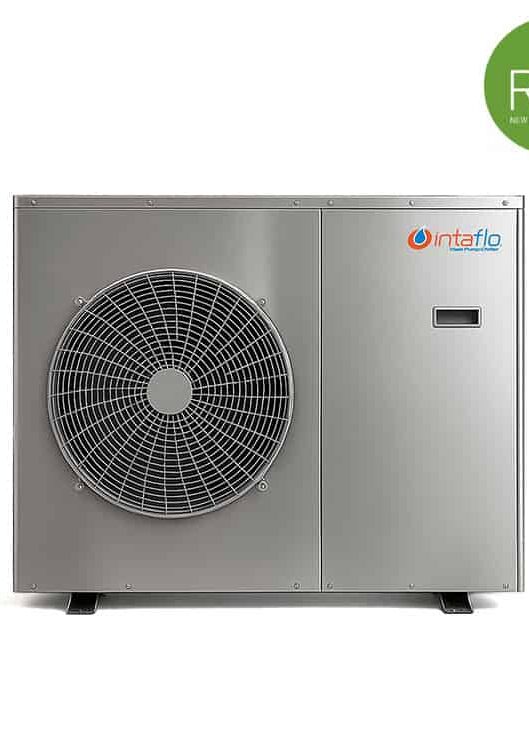
| Intaflo Series 3 Heat Pump | Primary heat source for all new hydronic systems | From approx. $6,000–$10,000 installed (size dependent) |
| DIY Hydronic Kit | Licensed tradespeople and experienced owner-builders | Supply only; includes custom design layout |
For a medium-sized new build of around 200 square metres, a complete hydronic underfloor heating system including in-screed pipe, manifold, and Intaflo heat pump typically costs between $30,000 and $50,000 fully installed. For an in-slab system in a new concrete build, the cost is lower because the pipe goes in before the pour.
Hydronic systems are recommended for areas of 80 square metres and above, with an absolute minimum of 40 square metres. Below that threshold, electric heating is the more economical choice.
To explore the full hydronic product range, visit the hydronic underfloor heating overview page.
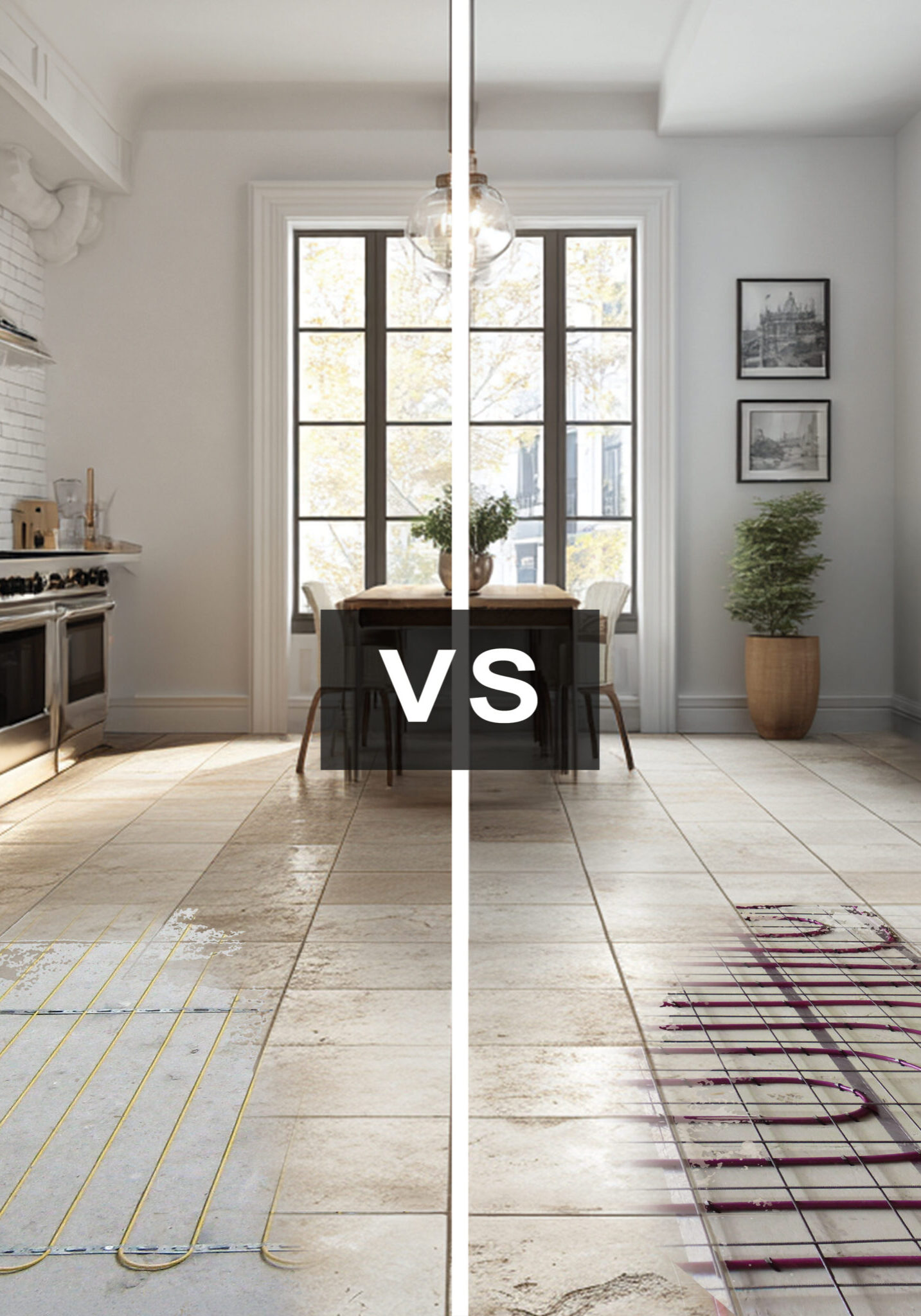
For a side-by-side comparison of electric and hydronic systems including cost, visit our electric vs hydronic underfloor heating guide.
Underfloor Heating Running Costs in Australia
Running costs are where underfloor heating really proves its value. Because the system heats the floor surface directly and is controlled by a precise thermostat, it only runs when it needs to.
There is no wasted heat, no air loss through ducts, and no overcooling between cycles.
Electric Underfloor Heating Running Costs
Electric underfloor heating in Australia costs around 2 to 5 cents per square metre per hour to run. The actual figure depends on your electricity tariff, the floor covering, the insulation of the room, and how long the system runs each day.
Here are some real-world examples based on current Australian electricity rates:
| Room | Floor Area | Daily Use | Approx. Daily Cost | Approx. Winter Cost (13 weeks) |
| Bathroom | 4 m² | 4 hours | $0.45–$0.70 | $41–$64 |
| Bathroom | 6 m² | 4 hours | $0.65–$1.00 | $59–$91 |
| Kitchen | 12 m² | 5 hours | $1.30–$2.00 | $118–$182 |
| Bedroom | 15 m² | 6 hours | $1.95–$3.00 | $177–$273 |
| Living area | 25 m² | 6 hours | $3.25–$5.00 | $296–$455 |
Electricity tariffs vary across Australia. You can check current rates at the Australian Energy Regulator. For an exact running cost based on your tariff and floor size, the Comfort Heat Cost Calculator does the calculation for you.
Hydronic Underfloor Heating Running Costs
Hydronic underfloor heating paired with the Intaflo Series 3 heat pump is the most energy-efficient whole-home heating option in Australia.
The heat pump achieves a coefficient of performance (COP) of around 3.45, which means it delivers 3.45 units of heat energy for every 1 unit of electricity consumed. For a medium-sized home of around 160 square metres, annual running costs typically sit between $1,200 and $1,500 per year, based on estimates from Sustainability Victoria.
When combined with rooftop solar, running costs reduce further. Pre-heating the slab during peak solar hours (roughly 10am to 3pm) means the floor holds warmth into the evening at no electricity cost. The larger the solar system and the more thermal mass in the slab, the greater the saving.
How to Calculate Your Underfloor Heating Running Cost
Working out exactly what your underfloor heating will cost to run is straightforward once you know three numbers: the heat load of the system (watts per square metre), your electricity tariff (cents per kWh), and how many hours per day the system runs.
Comfort Heat uses the following formula to estimate electric running cost per hour:
Electric cost per hour = [ (heat load in watts / 1000) x electricity tariff ] x 0.65
The 0.65 factor accounts for the thermostat duty cycle. Once the floor reaches temperature, the thermostat cycles the system on and off to maintain it. On average, the system is active about 65% of the time during a heating window. Keeping doors closed reduces this further and cuts running costs.
For hydronic systems with the Intaflo heat pump, the formula adjusts for the heat pump's COP:
Hydronic cost per hour = [ (heat load / 1000) x electricity tariff x 0.65 ] / 3.45
You do not need to do this maths manually. The Comfort Heat Cost Calculator handles all of it. Enter your floor size, your electricity tariff, and your daily usage window, and it returns your estimated running cost per hour, per day, and per season.
Use the Comfort Heat Cost Calculator to get your personalised running cost estimate now.
What Does a Thermostat Add to the Cost?
Every underfloor heating system needs a thermostat. The thermostat controls when the system runs, what temperature it holds, and how it responds to changes in the room.
A good thermostat is not just a convenience, it is the tool that keeps your running costs low.
Comfort Heat offers two thermostat options for most installations. The MWD5 Programmable Wi-Fi Thermostat allows full remote control from your phone and costs around $250 to $350 supply and install. It supports multiple daily schedules, away mode, and temperature limits to protect sensitive floor coverings.
The MCD3 Standard Control Thermostat is a simpler, reliable option for straightforward installations and costs around $200 to $280 supply and install.
Both thermostats include a floor sensor as standard and are available across the full Comfort Heat thermostat range.
A thermostat that is set well, heating only when the room is in use, can reduce running costs by 30 to 50% compared to running the system continuously.
Comfort Heat tip: Set your thermostat to switch on 30 to 60 minutes before you need warmth. Tiles and screed take time to reach temperature, so a head start means the floor is comfortable when you walk in. Read our guide to zone-controlled underfloor heating for more on managing costs across multiple rooms.
Ways to Reduce Your Underfloor Heating Costs
A few simple steps can make a meaningful difference to what you pay to run underfloor heating across an Australian winter.
- Use a smart thermostat schedule: Program your system to run only when rooms are in use. The MWD5 Wi-Fi Thermostat lets you set multiple daily windows and adjust them from your phone.
- Run off solar where possible: If you have rooftop solar, schedule your heating to run during generation hours to offset electricity costs.
- Insulate well: Good insulation under and around the heated area reduces heat loss and lowers the duty cycle of the thermostat. This directly reduces running costs.
- Use zone control: Heat only the rooms you are using. A zoned hydronic system or independent electric thermostats per room mean you never pay to heat empty spaces.
- Choose the right floor covering: Dense, heat-retaining floor coverings like porcelain tiles hold warmth longer after the system cycles off. This reduces how often the system needs to run.
- Install at renovation time: The earlier underfloor heating is installed in a project, the lower the labour cost. Adding it to an existing tiled bathroom is more expensive than installing during a retile. See our guide to how to compare floor heating quotes for tips on getting the best value.
For more on how different floor coverings affect cost and performance, read our article on the best flooring for underfloor heating.
Is Underfloor Heating Worth the Cost in Australia?
For most Australian homeowners, the answer is yes.
Underfloor heating is not cheap to install, but the ongoing cost is low, the maintenance cost is zero for electric systems, and the comfort benefit is significant. There are also no moving parts to wear out, no filters to clean, and no service calls to budget for.
The strongest case for underfloor heating is in bathrooms. A 5 square metre bathroom system costs around $800 to install and less than $65 to run for an entire winter.
For that, you get warm tiles every morning and evening, no cold shock underfoot, a drier bathroom, and no portable heater risk in a wet area. For most Australian families, that represents outstanding value.
For whole-home heating, the value case is strongest in cold climates and larger homes where hydronic with the Intaflo heat pump is used. The higher upfront cost is offset by lower running costs, solar compatibility, and the fact that the system adds genuine value to the property.
For a deeper look at whether underfloor heating makes financial sense for your specific situation, read our article: are underfloor heating systems expensive? And for a direct comparison with ducted gas heating, read our ducted heating vs underfloor heating guide.
Ready to get a cost estimate for your project? Contact the Comfort Heat team for a free, no-obligation quote. We include a custom design layout with every quote — the only heating company in Australia to do this as standard.
Cost Summary by System Type
Here is a quick reference for underfloor heating costs across all main system types in Australia.
| System | Install Cost (per m²) | Best For | Running Cost (approx.) | Maintenance |
| Thin Heating Mat (electric) | $100–$160 | Bathroom and kitchen tiles | 2–5c per m² per hour | Zero |
| Screed Cable (electric) | $120–$200 | Any room with screed | 2–5c per m² per hour | Zero |
| Carpet Heating Mat (electric) | $80–$130 | Bedrooms and living areas | 2–4c per m² per hour | Zero |
| Under Timber Mat (electric) | $100–$160 | Floating timber floors | 2–5c per m² per hour | Zero |
| Electric Slab Cable | $60–$100 | New builds | 2–5c per m² per hour | Zero |
| Hydronic In-Screed | $150–$250 (excl. heat source) | New builds, 80m²+ | $1,200–$1,500/yr (full home) | Annual heat source service |
| Hydronic In-Slab | $60–$100 (excl. heat source) | New builds with concrete slab | $1,200–$1,500/yr (full home) | Annual heat source service |
For a personalised cost estimate based on your home and project type, use the Comfort Heat Cost Calculator or contact our team for a free quote.
Frequently Asked Questions
How much does underfloor heating cost to install in Australia?
Electric underfloor heating costs between $80 and $200 per square metre installed, depending on the system. A typical bathroom installation costs $600 to $900 fully installed. Hydronic systems cost $150 to $250 per square metre for pipe and screed, plus the heat source. Full hydronic whole-home systems in a medium-sized new build typically cost $30,000 to $50,000 installed.
How much does underfloor heating cost to run per day in Australia?
For a standard 5 square metre bathroom running for 4 hours per day, electric underfloor heating costs around 65 to 90 cents per day. For a 12 square metre kitchen running for 5 hours, expect around $1.30 to $2.00 per day. Use the Comfort Heat Cost Calculator to get a figure for your specific floor size and tariff.
Is underfloor heating expensive to run?
No. Electric underfloor heating costs 2 to 5 cents per square metre per hour to run. Because the system heats a specific area with a precise thermostat, there is very little wasted energy. A whole winter of bathroom heating typically costs less than $65 for most Australian households.
What is the cheapest underfloor heating system to install in Australia?
Carpet Heating Mats and Electric Slab Cable are the most affordable systems to install. For renovations, Thin Heating Mats are the most cost-effective option because they sit within the tile adhesive layer and require no extra floor build-up.
Does underfloor heating add value to a home in Australia?
Yes. Underfloor heating is an increasingly expected feature in premium Australian homes, particularly in bathrooms, kitchens, and master bedrooms. Hydronic whole-home heating adds meaningful value to properties in cold climate zones like Victoria, the ACT, Tasmania, and alpine regions.
How do I calculate my underfloor heating running cost?
Use the formula: [(heat load in watts / 1000) × electricity tariff] × 0.65 to get cost per hour. Or skip the maths and use the Comfort Heat Cost Calculator, which lets you enter your floor size and tariff to get a running cost estimate instantly.
Ready to find out more?
Every great project starts with a conversation. Talk to the team here at Comfort Heat today for honest, expert advice on heating your bathroom.