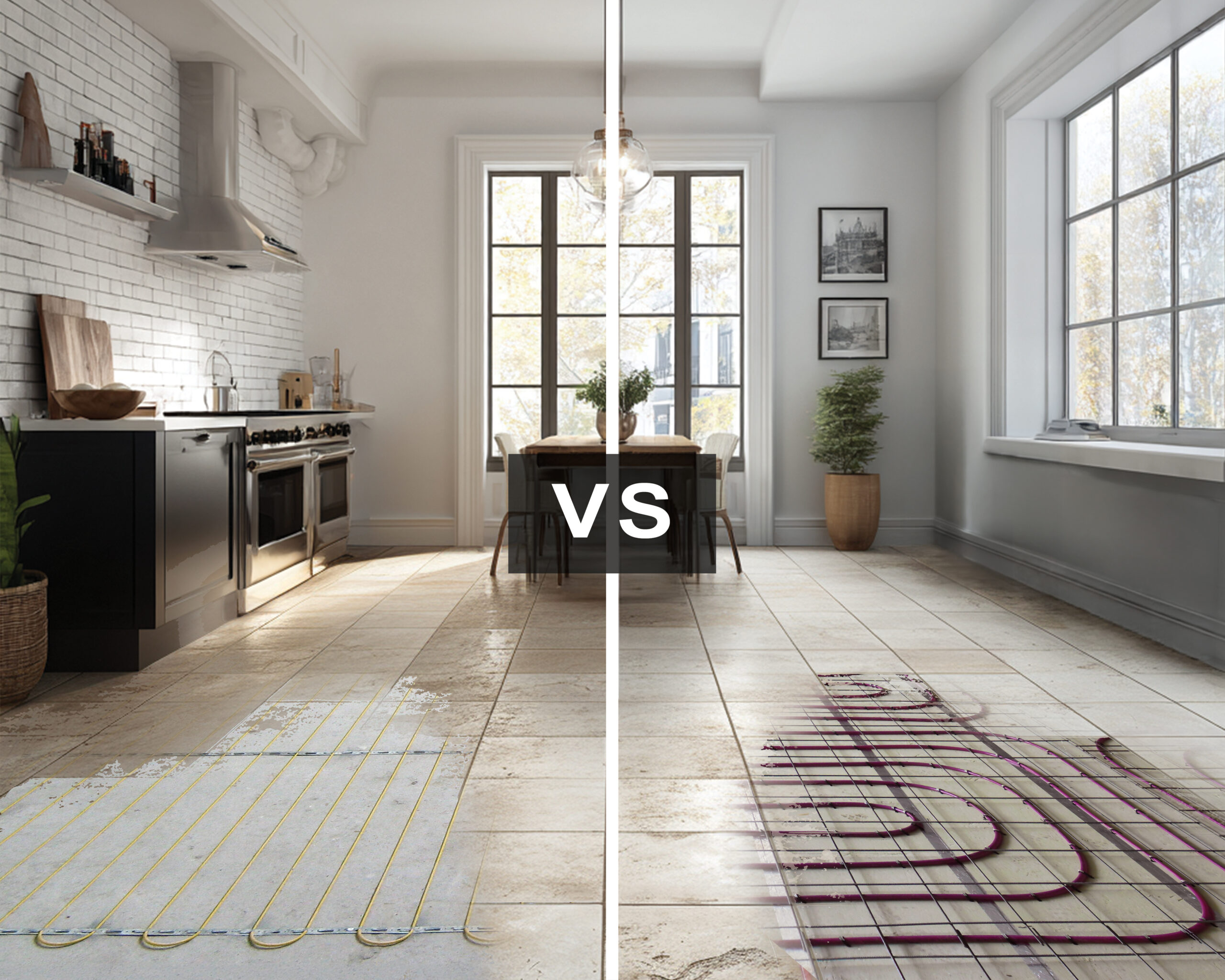
Choosing between electric vs hydronic underfloor heating is one of the biggest decisions in any Australian renovation or new build.
Get it right and you will enjoy decades of invisible, irresistible comfort. Get it wrong and you may be living with an expensive mistake.
This guide covers everything you need to know. We look at costs, installation, heat-up times, climate suitability, and give you a clear decision matrix to help you choose with confidence.
Table of Contents
- How Each System Works
- Heat-Up Time Compared
- Running Costs: Electric vs Hydronic
- Installation: What's Involved?
- Maintenance Requirements
- Climate Suitability in Australia
- Solar and Heat Pump Compatibility
- Electric vs Hydronic: Decision Matrix
- Which System Does Comfort Heat Recommend?
- Frequently Asked Questions
How Each System Works
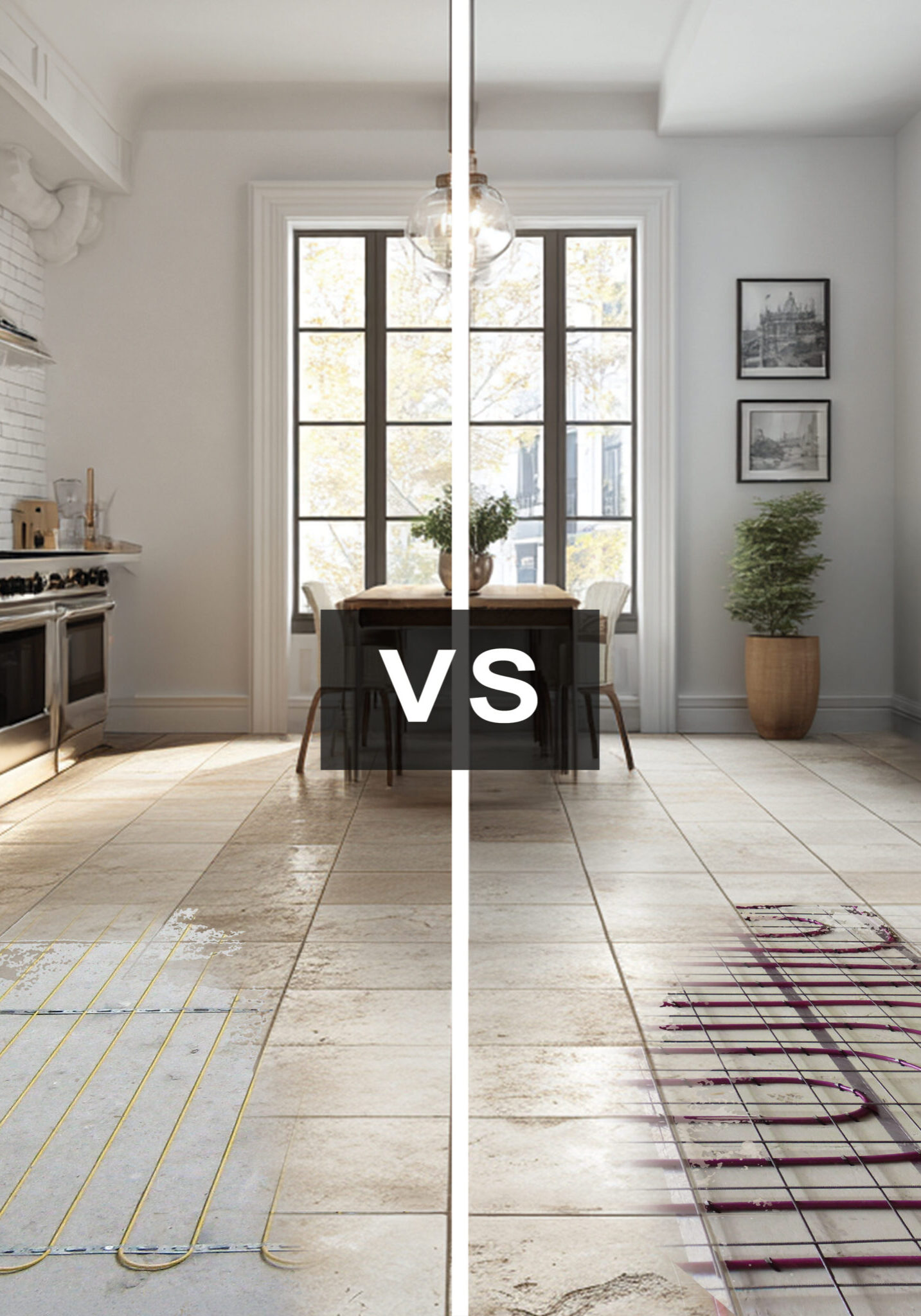
When comparing electric vs hydronic underfloor heating, it helps to understand how each one works.
Electric underfloor heating uses heating cables or mats installed beneath your floor. Electricity passes through the cable and heats it up. That warmth radiates up through the floor and into the room. There is no hot air blowing around. There are no hot and cold spots. Just a gentle, even warmth across the whole floor.
Comfort Heat offers a full range of electric systems to suit almost every project:
- Screed Cable Cables embedded in a sand and cement screed; works under all floor coverings; great for bathrooms, kitchens, extensions, and larger rooms.
- Thin Mats Low-profile mats laid beneath hard floors and set in tile adhesive or levelling compound; minimal height impact; perfect for renovations.
- Timber Mats Foil mats designed for floating timber floors; engineered to work within timber's specific heat and expansion needs.
- Carpet Mats Thin foil mats installed between underlay and carpet; completely undetectable underfoot; great for bedrooms and living areas.
- Slab Cable Cables embedded into a concrete slab during construction; permanently hidden; works under any floor covering can enjoy the power saving benefits of off peak electricity.
- DIY Kits Custom-designed kits with a personalised installation diagram and full technical support; suitable for owner-builders and experienced tradespeople
Hydronic underfloor heating works differently. It circulates warm water through a network of pipes buried beneath your floor. The water is heated to a maximum of around 45 degrees Celsius and circulated through continuous pipe loops. All loops connect back to a central manifold that controls the flow.
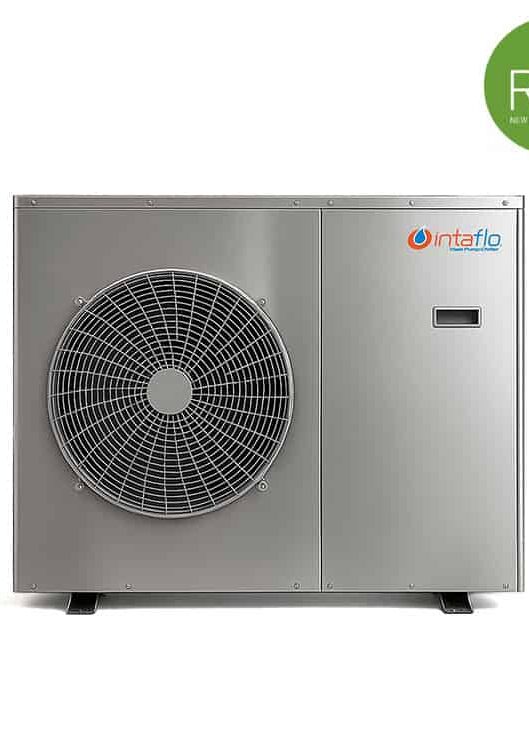
The most common heat source is the Intaflo Series 3 air-to-water heat pump. Comfort Heat's hydronic product range includes:
- Hydronic Screed Floor Heating Pipes set in a sand and cement screed; one of the most energy-efficient ways to heat a home.
- Hydronic Slab Floor Heating Pipes embedded in a concrete slab during construction, ideal for large new builds and commercial projects.
- Hydronic Timber Floor Heating Low-profile pipes beneath timber flooring; installed on battens with aluminium diffuser plates for even distribution.
- DIY Hydronic Kits Custom-designed kits for experienced owner-builders and licensed tradespeople.
Both systems deliver the same result. Even, radiant warmth that rises gently from the floor up. No visible heaters. No dust. No dry air. No noise.
The difference is in how they are installed, how quickly they warm up, what they cost to run, and where they work best.
Heat-Up Time Compared
Heat-up time is one of the most practical differences in the electric vs hydronic underfloor heating comparison.
It matters a lot in the Australian climate, where mornings are cold but days can warm up quickly.
Electric systems vary depending on the product:
- Carpet Mats: warm in as little as 20 minutes
- Thin Mats: typically reach full temperature in around 60 minutes
- Screed Cable: typically reach full temperature in around 60 minutes depending on screed thickness.
- Slab Cable: can take up to 48 hours to fully warm the concrete slab
Both electric and hydronic slab systems use thermal mass. This can take up to 48 hours when first switched on for the season, but once the slab is warm, it holds that heat for a long time. It keeps radiating warmth even after it has been switched off. Think of it like a big heat battery under your floor.
The key point is this: Electric, screed, thin mats and carpet mats are great for smaller, on-demand heating. Programme them to switch on before your alarm, and the floors are warm when you step out of bed.
Hydronic slab and screed systems suit continuous whole-home heating. You set a comfortable temperature and let the thermal mass do the work all winter.
Comfort Heat tip: Both systems can be scheduled and controlled from your phone using the MWD5 Programmable Wi-Fi Thermostat so you don’t pay to heat an empty home.
Running Costs: Electric vs Hydronic
Running costs are the question we get asked most when people compare hydronic heating vs electric heating. The honest answer is that it depends on how much you are heating and how you generate that heat.
For individual rooms, electric underfloor heating is usually the more affordable option. A bathroom system running for a few hours each morning and evening does not cost much to run. You are only heating one room. You only pay for exactly the warmth you use.
For whole-home heating, hydronic becomes much more cost-effective over time. This is especially true when paired with the Intaflo heat pump. A heat pump extracts warmth from the outside air and transfers it into the water circuit. It uses a fraction of the electricity that a cable system would use over the same area. For large homes in cold climates, the long-term savings can be significant.
Your actual running costs will also depend on your electricity tariff, how well your home is insulated, your floor covering, and whether you have solar panels.
To understand more about the daily running costs, visit our running costs guide here or use the Comfort Heat Product Finder to get a cost estimate for your specific project.
Installation: What's Involved?
Installation is often the deciding factor for Australian homeowners and builders. The two systems are very different in terms of complexity and cost.
Electric Underfloor Heating Installation
Electric systems are simpler and less disruptive to install. Thin Heating Mats can be laid directly beneath floor tiles within the tile adhesive layer. They add very little height to the room. Screed Cable systems need a sand and cement screed and can be done as part of a standard bathroom or kitchen renovation.
Comfort Heat electric systems can be installed by a trades person or owner-builders. The DIY Electric Kit includes a custom-designed layout diagram and full support from our technical team. Comfort Heat is the only heating company in Australia that provides a custom design layout for every single project, no matter how big or small.
Electric heating suits:
- Bathroom, laundry, and kitchen renovations
- Apartments where floor height cannot change
- Adding heating to individual rooms in an existing home
- Projects where work needs to be done quickly and with minimal disruption
Hydronic Underfloor Heating Installation
Hydronic installation is a more involved process. The pipe loops need to be laid before the screed or slab is poured. Every loop runs back to a central manifold. A minimum of 30mm of cement must cover the pipes, making the total floor build-up at least 50mm, including the pipe. The system also needs a heat source, associated pipework, and commissioning by a licensed plumber.
The REHAU PEX pipe used in all Comfort Heat hydronic systems is guaranteed for installation in cement for 25 years and currently certified to 50 years. All joins are guaranteed leak-free. It is built to last a lifetime.
Because of the infrastructure required, hydronic underfloor heating suits larger heated areas, typically at least 80 square metres. It needs to be planned from the design stage of a new build or major renovation.
Hydronic heating suits:
- New homes where whole-home heating is planned from the start
- Major renovations where floors are being completely opened up
- Large commercial or high-specification residential builds
- Homes in cold climates where continuous heating across winter is needed
Here is a general cost guide:
- Electric underfloor heating starting at $380 makes it very affordable for targeted room heating.
- Hydronic underfloor heating typically starting around $8,000 in an investment. The Intaflo Series 3 is available in 9, 12, 18, 24 and 30kW sizes to suit different project needs. It is a higher upfront cost, but running cost savings at scale make it worthwhile.
Maintenance Requirements
Electric underfloor heating needs no ongoing maintenance. Once installed, the cables or mats sit quietly under your floor. There are no moving parts. There are no fluid circuits. There is nothing to service. But if something does go wrong, a licensed electrician can locate the issue using a high-voltage trace. Most of the time this means replacing just one tile area, not the whole floor.
Hydronic systems need periodic maintenance. The water circuit needs to be checked regularly for water quality, inhibitor levels, and pressure. The heat source, whether that is the Intaflo heat pump or a gas boiler, needs servicing to stay efficient and reliable. Think of it like servicing a car or a ducted air conditioning system. It is not a big commitment, but it is a real one.
If you want a system that you can install and forget about, electric is the winner on maintenance. For a whole-home hydronic system, factor the servicing cost into your long-term budget.
Climate Suitability in Australia
Australia's climate is unique, and it plays a big role in choosing between electric vs hydronic underfloor heating.
Most of Australia does not get the kind of deep, sustained cold you find in Europe or North America. Across Sydney, Brisbane, and coastal areas, winter brings cool mornings and evenings but milder days. Melbourne, Canberra, Hobart, and alpine regions are colder and stay that way for longer.
Electric underfloor heating suits Australia's temperate and coastal climates well. In places like Sydney or Brisbane, you need warmth for a couple of hours in the morning and again in the evening. You do not need the whole house at full temperature all day. Electric heating responds quickly, heats only what you need, and switches off when you are done. It is also the safest heating option for bathrooms, with no active electrical components that can be touched.
Hydronic underfloor heating works best in when you want the whole house warm. The thermal mass of a hydronic slab is a genuine advantage here. It holds heat through cold nights and reduces how often the heat pump needs to cycle on and off.
Solar and Heat Pump Compatibility
More and more Australian households are investing in rooftop solar and battery storage. How well does each system work with solar?
The Intaflo Series 3 heat pump is built for solar. It runs entirely on electricity, so it can be powered straight from your solar panels. It uses R32 refrigerant and includes built-in Wi-Fi control for smart scheduling. Available in 9, 12, 18, 24 and 30kW sizes, there is an Intaflo unit to suit any home.
The thermal mass of the slab makes solar integration even smarter. Pre-heat the slab during peak solar hours (roughly 10am to 3pm) and it keeps releasing that warmth into the evening when you need it most.
Electric underfloor heating also works well with solar, especially in smaller installations managed via the MWD5 Wi-Fi Thermostat. Simply schedule your heating to run during solar generation hours. As battery storage becomes more affordable across Australia, this combination will only get better.
On gas: Comfort Heat recommends the Intaflo heat pump as the standard heat source for all new hydronic installations. Australia is moving away from gas in new residential builds. If gas infrastructure is already in place, a compatible gas boiler is still a practical option for renovations. For anyone starting fresh, the heat pump is the future-proof choice.
Electric vs Hydronic: Decision Matrix
Use this table to find the right system for your home.
| Factor | Electric Underfloor Heating | Hydronic Underfloor Heating |
| Best project type | Renovation, retrofit, apartment | New build or major full-floor renovation |
| Ideal heating area | Any size, from a single bathroom | 80 square metres or more recommended |
| Upfront cost | Starting at $380 | Starting at $8,000 |
| Long-term running costs | Moderate | Lower with Intaflo heat pump and solar |
| Heat-up time | 30 min (carpet) to 60 min (tile) Up to 48 hours for slab | Up to 48 hours for slab or screed |
| Ongoing maintenance | None | Servicing of heat source needed |
| Solar compatibility | Good with MWD5 smart scheduling | Excellent with Intaflo Series 3 and solar panels |
| Floor height impact | Minimal with Thin Mats | 50mm minimum total build-up for screed |
| Minimum viable area | No minimum, one bathroom is fine | Typically around 80m² |
| Gas phase-out readiness | Fully electric, future-proof now | Heat pump option is fully future-proof |
| DIY option available | Yes, DIY Electric Kit | Yes, DIY Hydronic Kit (licensed trades) |
Which System Does Comfort Heat Recommend?
At Comfort Heat, we do not believe in one-size-fits-all answers. With 75 years of combined engineering and installation experience across our team, we will always provide you with honest advice. Even if that means recommending a simpler or lower-cost option than you expected. Honest, sound advice is the foundation our business has been built on.
If you are renovating a bathroom, laundry, or individual room, electric underfloor heating is almost always the right answer. Our range covers every situation. Thin Heating Mats where floor height is tight. Screed Cable for bathrooms and kitchens. Timber Mats for floating floors. Carpet Heating Mats for bedrooms and living areas.
If you want to manage the installation yourself, our DIY Electric Kit includes a personalised layout diagram and full support from our technical team.
If you are building a new home or doing a major whole-home renovation, hydronic is worth serious consideration, especially when paired with the Intaflo Series 3 heat pump and rooftop solar. At 100 square metres and above, the running cost savings are real.
The comfort of a whole-home radiant system in a cold Australian climate is something you have to feel to believe. Our DIY Hydronic Kit is also available for experienced owner-builders and licensed tradespeople.
Whatever your project, every Comfort Heat job comes with a custom design layout. We are the only heating company in Australia to offer this as standard, for every project, regardless of size or complexity.
Ready to explore your options? Use the Comfort Heat Product Finder to find the right system for your renovation.
Or contact us to speak to one of our heating specialists or get a free quote today.
Frequently Asked Questions
Is electric or hydronic underfloor heating cheaper to run?
For individual rooms, electric is usually cheaper to run. For whole-home heating over 100 square metres, hydronic with an air-to-water heat pump like the Intaflo Series 3 is generally more economical over time. This is especially true when combined with rooftop solar.
Which underfloor heating is better for a bathroom renovation in Australia?
Electric underfloor heating is the best choice for Australian bathroom renovations. It is simple to install, adds minimal floor height, needs no maintenance, and is the safest heating option for bathrooms, especially in homes with young children.
Can underfloor heating be installed under existing floors?
Electric Thin Heating Mats can be installed in many renovations within the tile adhesive layer with very little disruption. Hydronic systems need access to the subfloor or slab before pouring and are best suited to new builds or major renovations.
How long does underfloor heating last?
The REHAU PEX pipe used in Comfort Heat hydronic systems is currently certified to 50 years. The installation in cement is guaranteed for 25 years. All joins are guaranteed leak-free. Electric cable systems are built to similar standards with no moving parts to wear out over time.
Does underfloor heating work with timber floors?
Yes. Comfort Heat offers dedicated Under Timber Electric Mats and Under Timber Hydronic Heating systems. Both are suitable for floor heating approved, floating and engineered timber floors.
Is hydronic underfloor heating worth it in Australia?
Absolutely, Hydronic heating is the face of Australia’s Net Zero sustainable future. As gas begins to slowly faze out of new constructions, Heat Pump, thermal mass heating solutions is the future solution.
Ready to find out more?
Every great project starts with a conversation. Talk to the team here at Comfort Heat today for honest, expert advice on heating your bathroom.