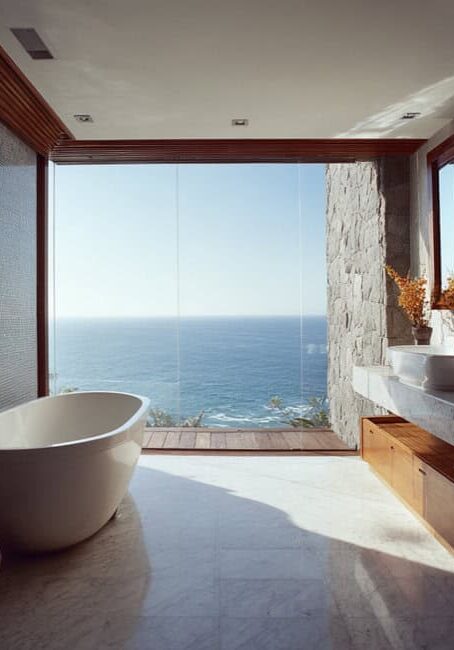
Underfloor heating for bathrooms is the most popular home heating upgrade in Australia and it is easy to see why.
Cold tiles, wet floors, and small spaces make bathrooms the perfect room to heat, and there’s nothing more luxurious than stepping onto warm tiles in the morning. The cost is low, the installation is straightforward during a renovation, and the result is a warm, dry, mould-free bathroom every single morning.
This guide covers everything you need to know.
Table of Contents
Why the Bathroom Is the Number One Room to Heat
Ask any Australian homeowner what room they would heat first and most will say the bathroom. It is the room where cold tiles are felt most sharply, first thing in the morning and last thing at night. It is also the room where other heating options simply do not work well.
Portable heaters are a safety risk in wet areas. Heated towel rails warm towels but do very little for the floor. And because bathrooms are small, underfloor heating covers the whole area for very little cost. A typical Australian bathroom is between 3 and 9 square meters. That is one of the smallest and most affordable rooms in the home to heat.
There are three reasons why bathrooms and underfloor heating are such a natural fit:
- Safety — no portable heaters, no towel rails left on overnight, no risk in a wet area. Electric underfloor heating is the safest heating option for bathrooms in Australia.
- Comfort — warm tiles underfoot from the moment you step in. There’s no more luxurious feeling than stepping into a warm bathroom in the morning!
- Mould prevention — a warm, dry bathroom floor reduces condensation and moisture build-up, helping to keep mould at bay.
Underfloor heating also keeps the whole bathroom at a consistent temperature. This means less condensation on mirrors, less moisture in the air, and a bathroom that stays cleaner and fresher for longer.
The Best System for Bathroom Underfloor Heating
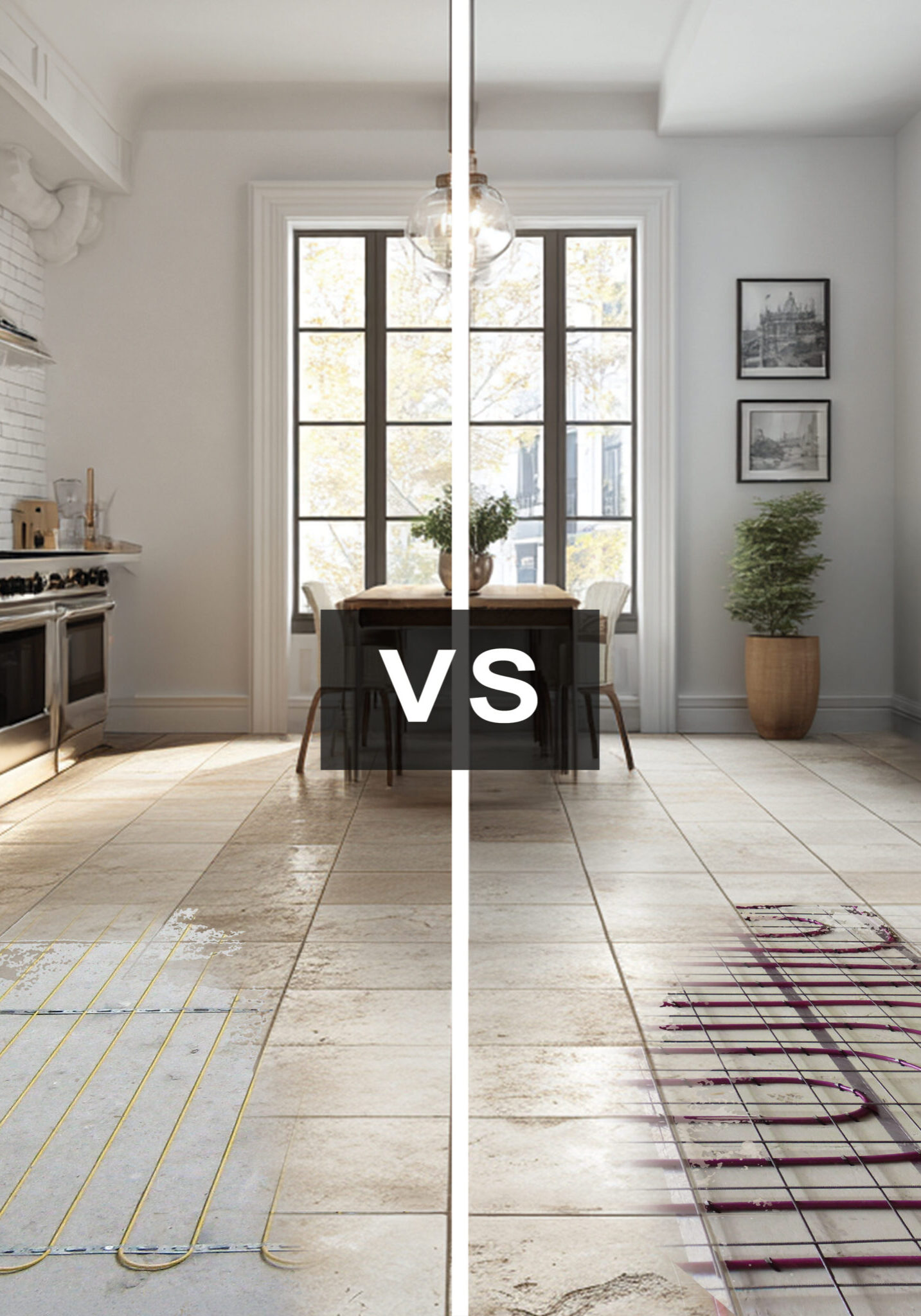
For bathrooms, electric underfloor heating is almost always the right choice. Hydronic systems are designed for whole-home heating at larger scale. For a single bathroom, electric wins on cost, simplicity, and installation time every time.
Comfort Heat offers two electric systems specifically designed for bathrooms. The right one for your project depends on whether a screed layer is being laid or not.
Option 1: Electric Screed Cable
The Electric Screed Cable is the most popular product for bathroom underfloor heating in Australia. The heating cable is attached to a lightweight mesh that sits on top of the subfloor, before the sand and cement screed is poured. The mesh keeps the cable evenly spaced across the floor and protects the waterproofing membrane underneath.
Once the screed is laid and tiles are on top, the system is completely hidden. There is nothing to see and nothing to maintain. The system heats up within 1 to 2 hours, making it easy to program for morning and evening use.
Screed Cable suits bathrooms where:
- A sand and cement screed is being laid as part of the renovation
- You want the most even heat distribution across the floor
- You have standard floor height clearance
Option 2: Electric Thin Heating Mat
The Electric Thin Heating Mat is used when no screed is being laid and floor height is a concern. The mat sits directly within the tile adhesive layer, adding minimal height to the floor. A thin layer of Ardit can be added on top at the tiler's discretion. Like the screed system, the thin mat heats up within 1 to 2 hours.
Some floor chasing may be needed to keep the height addition minimal. Both the screed and thin mat systems deliver the same warm result underfoot. The choice between them comes down to your floor construction, not your comfort outcome.
Thin Heating Mats suit bathrooms where:
- No screed is being laid and tiles are going straight to subfloor
- Floor height is limited and cannot increase
- You are doing a straightforward tile replacement during renovation
Both products are available as DIY kits and are controlled via a floor sensing thermostat, ensuring a consistent and comfortable temperature at all times.
How Much Does Bathroom Underfloor Heating Cost?
Cost is one of the most common questions we hear, and the good news is that bathroom underfloor heating is one of the most affordable home upgrades you can make. There are two costs to consider: the cost to install and the cost to run.
Installation Cost
For a standard Australian bathroom of around 3 to 9 square meters, you can expect to pay roughly $800 to $1,500 installed, including the WiFi programmable thermostat. This covers the heating mat or screed cable, and the thermostat. The electrical connection must be completed by your licensed electrician.
Installation cost varies depending on:
- The size of the bathroom
- Whether a screed or thin mat system is used
- The complexity of the electrical connection
- Whether you use a Comfort Heat DIY Kit or a full supply and install service
For a precise quote tailored to your bathroom, use the Comfort Heat free quote tool or speak with our team directly.
Running Cost
This is where bathroom underfloor heating really shines. Running costs are very low because the heated area is small and the system only runs for a few hours each day.
Here is a simple breakdown based on current Australian electricity rates:
| Bathroom Size | Daily Use | Cost Per Day | Cost Per Month |
| 4 m² (small) | 4 hours (2 morning, 2 evening) | Approx. 70c | Approx. $20 |
| 6 m² (average) | 4 hours (2 morning, 2 evening) | Approx. $1 | Approx. $30 |
| 9 m² (large) | 4 hours (2 morning, 2 evening) | Approx. $1.5 | Approx. $45 |
As a general rule, electric underfloor heating costs around 2 to 5 cents per square metre per hour to run, depending on your electricity tariff. For most Australian bathrooms, the total running cost over a full winter is less than one takeaway coffee per week.
Running your bathroom underfloor heating on a smart schedule, using only the hours you need it, keeps costs as low as possible. More on scheduling in the thermostat section below.
Installation During a Bathroom Renovation
The best time to install bathroom underfloor heating is during a renovation, when the floor is already being opened up. Adding underfloor heating to an existing tiled bathroom is possible but involves more work. If you are already retiling, the extra cost to add heating is minimal.
Here is what the installation process looks like for a typical bathroom renovation:
Step 1: Waterproofing First
Waterproofing must be done before the heating system is installed. A waterproof membrane is applied to the subfloor and walls to protect against moisture. The Comfort Heat screed cable system uses a lightweight mesh that sits on top of the waterproofing, so the membrane is never damaged during installation.
All Comfort Heat bathroom heating products are designed with wet areas in mind.
Step 2: Laying the Heating System
Once the waterproofing is done, the heating cable or mat is laid across the floor area. A 230-volt power supply with earth runs to the thermostat location. All wiring must meet Australian standards and be protected by an RCD (residual current device). Conduits should be smooth and kink-free.
Every Comfort Heat project comes with a custom design layout diagram, showing exactly how the cable or mat should be laid for your specific bathroom dimensions. This is included with every job, at no extra cost. We are the only heating company in Australia to offer this as standard.
Step 3: Tile Selection
Most tiles work well with underfloor heating. Porcelain and ceramic tiles are the best choice. They conduct and hold heat well, heat up quickly, and are easy to maintain. Natural stone tiles also work, but take longer to reach temperature.
Avoid thick or heavily insulating floor coverings directly over the heating system. Your Comfort Heat design team will advise on tile compatibility as part of your custom layout.
Step 4: Thermostat Placement
The thermostat is installed on the wall, usually near the light switch or at a convenient height. A floor sensor sits beneath the tiles and feeds temperature data back to the thermostat in real time. This keeps the floor at a consistent temperature and protects sensitive floor coverings from getting too hot.
Comfort Heat offers two thermostat options for bathrooms. The MWD5 Programmable Wi-Fi Thermostat allows full remote control from your phone. The MCD3 Standard Control Thermostat is a straightforward, easy-to-use option with simple programming and a clear display. Both include a floor sensor as standard.
How to Program Your Thermostat for a Bathroom
One of the great things about bathroom underfloor heating is how easy it is to program. You set it once and it looks after itself. Most Australian households find that two heating windows per day are all they need.
Here is a simple schedule that works well for most families:
| Time Window | Duration | Why |
| 6:00am to 8:00am | 2 hours | Warm floors for the morning routine |
| 6:30pm to 8:30pm | 2 hours | Warm floors for evening showers and baths |
With this schedule, the system runs for about 4 hours per day. Based on an average Australian electricity tariff, this costs less than $1 a day for most bathrooms.
The MWD5 Wi-Fi Thermostat lets you adjust the schedule from your phone at any time. Heading home early? Switch it on from the car. Away for the weekend? Turn it off without touching the wall.
Comfort Heat tip: Set your heating to switch on 60 minutes before you need it. Tiles take a little time to warm up, so a head start means the floor is at the right temperature when you step in.
Comfort Heat's Bathroom Heating Products
Comfort Heat has been installing bathroom underfloor heating across Australia for over 25 years. Every bathroom project comes with a custom design layout, professional advice, and the option of full supply and install or a DIY kit with full technical support.
Here is a summary of the products available for bathrooms:
| Product | Best For | Floor Height Impact | Heat-Up Time |
| Electric Screed Cable | Bathrooms with screed being laid | Standard screed depth 10-30mm | 1 to 2 hours |
| Electric Thin Mat | Height-sensitive floors | 7mm | 1 to 2 hours |
| DIY Electric Kit (Screed or Thin Mat) | Owner-builders and tradespeople | As per product above | 1 to 2 hours |
| MWD5 Wi-Fi Thermostat | Smart scheduling and remote control | Wall-mounted, no floor impact | N/A |
| MCD3 Standard Thermostat | Simple, reliable control without Wi-Fi | Wall-mounted, no floor impact | N/A |
Visit our bathroom underfloor heating page to download product brochures or contact our team for a free recommendation.
Ready to get warm floors in your bathroom? Request a free bathroom heating quote from the Comfort Heat team today.
Want to explore all options first? Use the Comfort Heat Product Finder to find the right system for your renovation.
Frequently Asked Questions
Is underfloor heating in a bathroom worth it?
Yes. Bathrooms are the most popular room for underfloor heating in Australia. The area is small, so installation and running costs are low. The comfort benefit is significant, and warm dry floors also help reduce mould and condensation.
How much does it cost to run bathroom underfloor heating in Australia?
For a typical 4 to 6 square meter bathroom running for 4 hours a day, expect to pay around 60 cents to $1 per day. Over a full winter, this adds up to roughly $55 to $80 for the season.
What is the best type of underfloor heating for a bathroom?
Electric underfloor heating is the best choice for bathrooms. Comfort Heat offers two systems: Electric Screed Cable for bathrooms with a screed layer, and Electric Thin Heating Mats for tile-only renovations where floor height is limited.
Can underfloor heating be installed in an existing bathroom?
Yes, but it is easiest during a renovation when tiles are already being lifted. If you are retiling, adding underfloor heating at the same time adds very little to the overall cost. Retrofitting into an existing floor is possible but involves more work as you requires to retile.
Is bathroom underfloor heating safe?
Yes. Electric underfloor heating is the safest heating option for wet areas. There are no exposed electrical components, no risk from water contact, and no portable heaters or hot surfaces in the room. All Comfort Heat systems meet Australian standards and must be wired by a licensed electrician.
Do I need a special thermostat for a bathroom?
You need a thermostat with a floor sensor. This monitors the actual floor temperature and protects tiles and the heating system from overheating. Comfort Heat's MWD5 Wi-Fi Thermostat and MCD3 Standard Thermostat both include a floor sensor as standard.
Ready to find out more?
Every great project starts with a conversation. Talk to the team here at Comfort Heat today for honest, expert advice on heating your bathroom.