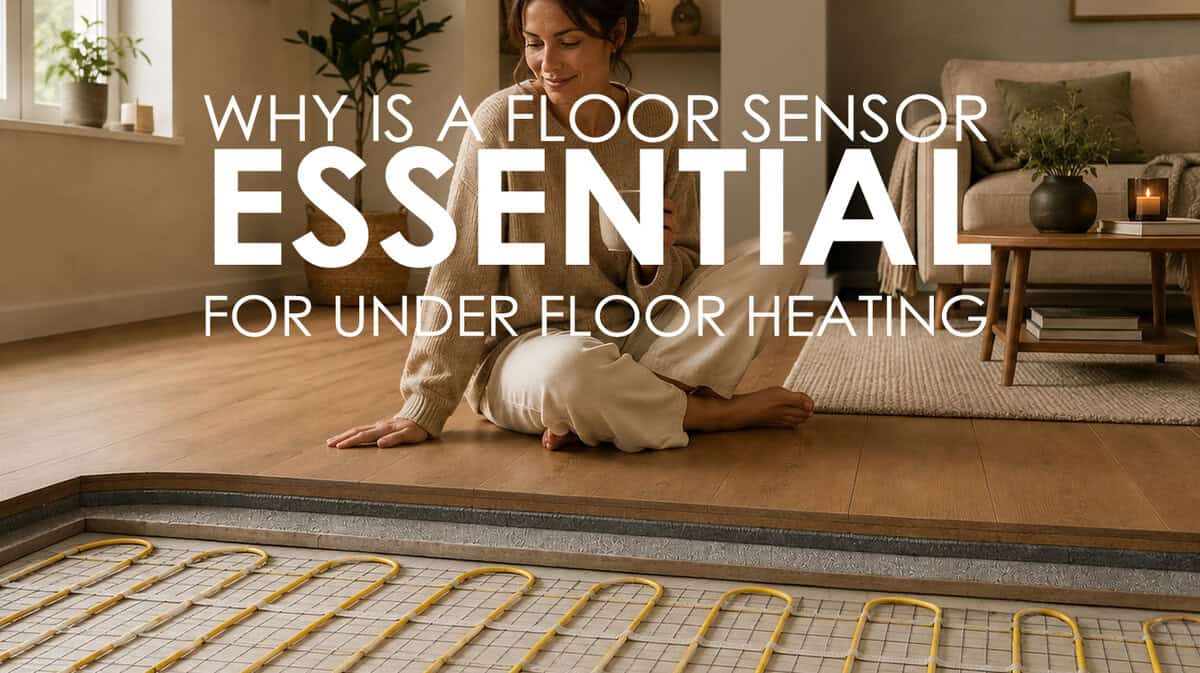
A floor sensor is a small temperature probe installed beneath your floor surface that tells your thermostat exactly how warm the floor is, so it can respond to real conditions rather than just the air in the room.
It may not be the most glamorous component of an underfloor heating system, but it may be the most important one for protecting your floor, controlling your running costs, and ensuring your system lasts.
This guide explains what floor sensors do, why they matter, when you need one, and how to choose the right thermostat and sensor setup for your Australian home or project.
Table of Contents
- What Is a Floor Sensor?
- How Does a Floor Sensor Work?
- Floor Sensor vs Air Sensor: What Is the Difference?
- Why Floor Sensors Matter in Australian Homes
- Key Benefits of Using a Floor Sensor
- When Is a Floor Sensor Essential?
- Comfort Heat Thermostats with Floor Sensor Control
- Installation: Where Should a Floor Sensor Be Placed?
- Frequently Asked Questions
What Is a Floor Sensor?
A floor sensor is a thin temperature probe (typically around 3 to 6 metres in length) that is installed beneath your floor finish and connects directly to your underfloor heating thermostat. It sits between the heating elements, or just below the floor surface, and continuously measures the actual temperature of the floor itself, not the air above it.
This distinction matters more than it might seem. Air temperature and floor temperature can be quite different, especially in well-insulated Australian homes where the floor retains heat long after the system has cycled off.
A thermostat relying only on air temperature has no way of knowing whether the floor is at 28°C or 42°C. A floor sensor does.
Comfort Heat includes a floor sensor as standard with every thermostat in its range. It is not an optional extra: it is a core part of how every system delivers consistent, safe, and energy-efficient warmth.
How Does a Floor Sensor Work?
The floor sensor probe runs from the thermostat mounting point, down through the wall cavity, and into a conduit beneath the floor. That conduit sits between the heating cables or mats, typically centralised between elements, to capture an accurate mid-point temperature reading.
As the floor heats up, the probe registers the change and sends a continuous temperature signal back to the thermostat.
The thermostat then makes one of three decisions:
- Keep heating: the floor has not yet reached the target temperature
- Cycle off: the floor is at target temperature and will hold heat passively while the thermostat monitors it
- Limit output: the floor is approaching the maximum safe temperature for the flooring material and heating must be reduced
This feedback loop is what gives underfloor heating its characteristic efficiency. Rather than running continuously until a room feels warm enough, the system heats to a precise floor temperature, holds it, and only runs again when the probe registers a meaningful drop.
On average, a system with a properly calibrated floor sensor runs at around 65% duty cycle. This means it is active for roughly 65% of its scheduled heating window rather than 100%, reducing your heating costs.
For hydronic systems, floor sensing plays an additional protective role. Without a floor sensor, small fluctuations in air temperature can trigger the heat pump or boiler to short-cycle, causing unnecessary wear on an expensive heat source component. The floor sensor provides a slow-moving, stable temperature reference that eliminates this problem entirely. If you have a hydronic system, regular servicing alongside correct floor sensor operation will keep it performing at its best for decades.
Floor Sensor vs Air Sensor: What Is the Difference?
Most underfloor heating thermostats can operate in one of two modes: floor sensing or air sensing. Some support a dual-sensor combination of both.
Understanding the difference is essential when specifying or setting up your system.
| Feature | Floor Sensor | Air Sensor | Dual Sensor (Floor + Air) |
| What it measures | Actual floor surface temperature | Ambient room air temperature | Both simultaneously |
| Prevents floor overheating | Yes | No | Yes |
| Protects sensitive flooring | Yes | No | Yes |
| Best for whole-room comfort | Good | Yes | Best of both |
| Recommended for timber / vinyl floors | Essential | Not sufficient | Ideal |
| Recommended for bathrooms / tiles | Yes | Less critical | Good option |
| Recommended for hydronic systems | Yes | No | Yes |
Comfort Heat's position is clear: floor sensor control is the recommended default for all systems. Air sensors have their place, particularly in living areas where overall room comfort matters as much as floor temperature, but they cannot protect your floor from overheating, and they cannot give the system the precise feedback it needs to run efficiently.
For a deeper explanation of how each mode works in practice, read our dedicated article on floor or air sensors to maintain temperature. It covers dual-sensor configuration, when to use each mode, and how to get the most from your thermostat setup.
Comfort Heat tip: A dual-sensor setup — where the floor sensor enforces a maximum temperature limit and the air sensor governs overall room comfort — is the ideal configuration for living areas and bedrooms. The MWD5 and ETN4 thermostats both support this dual mode.
Why Floor Sensors Matter in Australian Homes
Australian homes present specific conditions that make floor sensors particularly important.
Climate Variation
From subtropical Queensland to alpine Victoria, Australian homes heat and cool dramatically between seasons and within a single day.
A floor sensor ensures the system responds to actual floor conditions rather than ambient air fluctuations caused by open windows, cooking, or afternoon sun through north-facing glass.
Heat-Sensitive Australian Flooring
Engineered timber and floating vinyl plank floors are among the most popular choices in Australian renovations, and both carry strict maximum temperature requirements; typically 27°C for most engineered timber products.
Exceeding these limits causes cupping, gapping, and voided warranties. A floor sensor is the only reliable way to enforce these limits automatically. Read more in our guide to the best flooring for underfloor heating.
Insulated Slabs and Thermal Mass
Well-insulated new builds with concrete slabs retain heat efficiently. Without a floor sensor, a thermostat running purely on air temperature may continue to add heat to a slab that is already fully charged, wasting energy and risking overheating. Our article on making cold concrete floors a thing of the past explains the thermal dynamics of in-slab systems in detail.
Bathroom Comfort
In a tiled bathroom, the goal is a consistently warm floor surface rather than a specific air temperature. Floor sensing is the most direct and accurate way to maintain that barefoot comfort every morning. Our bathroom underfloor heating guide covers exactly how this works in Australian wet area renovations.
Key Benefits of Using a Floor Sensor
1. Protects Your Flooring Investment
Most engineered timber products specify a maximum floor surface temperature of 27°C. Most vinyl plank products allow up to 27°C to 29°C. Without a floor sensor, there is no automatic mechanism to enforce these limits.
This protection extends to safe system operation overall. When a floor sensor is correctly installed and the thermostat maximum is set to the manufacturer's specified limit, overheating becomes impossible. This is one of the key reasons Comfort Heat specifies a floor sensor on every single project.
2. Improves Energy Efficiency
Accurate floor temperature feedback allows the system to run only as much as necessary, reducing active running time to around 65% of the programmed heating window. This meaningfully reduces energy consumption and running costs. For a full cost breakdown, visit our underfloor heating cost guide.
3. Ensures Consistent Barefoot Comfort
Air temperature can feel comfortable while the floor itself is still cold, particularly in rooms with high ceilings, open plans, or large glass areas. A floor sensor guarantees the surface you walk on reaches and holds the target temperature. That is the specific comfort underfloor heating is designed to deliver.
4. Extends System Lifespan
Controlled, consistent operation reduces thermal stress on heating cables, mats, and screed. Elements that regularly overheat, even briefly, degrade faster. A floor sensor enforces a ceiling on maximum output and protects the integrity of the system across its 25 to 35-year service life.
5. Prevents Heat Source Short-Cycling (Hydronic Systems)
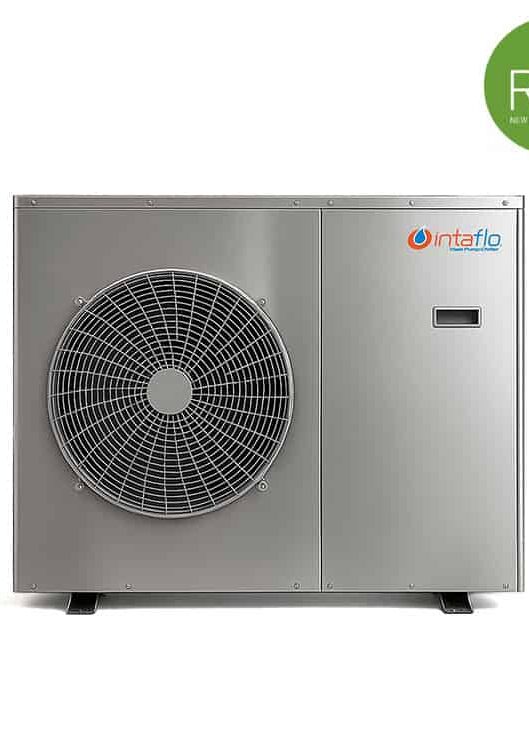
For hydronic underfloor heating systems running off the Intaflo Series 3 heat pump, the heat pump is the highest-value component in the system. Short-cycling causes unnecessary wear and shortens its service life. A floor sensor provides a stable, slow-moving temperature reference that prevents this completely.
6. Meets Manufacturer Warranty Requirements
Many flooring manufacturers require documented use of a floor sensor with a configured maximum temperature limit as a condition of their product warranty. Installing underfloor heating beneath a heat-sensitive floor without a floor sensor can void the floor covering warranty entirely.
When Is a Floor Sensor Essential?
A floor sensor is recommended for all underfloor heating installations. It is non-negotiable in these specific situations:
- Engineered timber, vinyl plank, or laminate floors: maximum temperature limits must be enforced automatically
- Hydronic systems with a heat pump or boiler: prevents short-cycling and protects the heat source
- New builds with insulated concrete slabs: high thermal mass means floor temperature lags significantly behind air temperature; air sensing alone is inaccurate
- Bathroom and wet area installations: consistent barefoot warmth requires direct floor sensing
- Well-insulated homes: efficient insulation causes floor temperature to build slowly and hold for a long time; accurate sensing prevents overheating
- Electric underfloor heating systems: electric elements heat up quickly and without a floor sensor, brief overheating events can damage both the cable and the floor finish above it
- DIY installations: all Comfort Heat DIY kits include a floor sensor and conduit as standard; correct placement during installation is one of the most important steps in a successful DIY project
Comfort Heat Thermostats with Floor Sensor Control
Every thermostat in the Comfort Heat thermostat range includes a floor sensor as standard and is designed specifically for Australian underfloor heating systems. Here is how to choose the right one for your project.
| Thermostat | Best For | Key Features |
| MWD5 Programmable Wi-Fi Thermostat | Most residential and renovation installations | 7-day, 4-event daily schedule; Wi-Fi app control; floor sensor included; configurable max floor temp limit; most popular Comfort Heat thermostat |
| MTD3 Standard Control Thermostat | Simple, single-room and low-complexity installs | On/off with adjustable set-point; floor sensor included; reliable set-and-leave operation; ideal for rental and secondary rooms |
| ETN4 Home Automation Thermostat | Smart homes with automation platforms | Compatible with Control4, Crestron, Clipsal C-Bus; floor sensor control with setback functions; whole-home automation integration |
Which Thermostat Is Right for Your Project?
For most Australian homeowners and renovators, the MWD5 is the best choice. Its 7-day programmable schedule means the floor is warm when you need it and off when you do not, which directly reduces running costs. The configurable floor temperature limit protects sensitive floor coverings automatically. For a step-by-step guide to setting it up, read our simple guide to turning on your MWD5 thermostat this winter.
The MCD3 suits secondary rooms, investment properties, or any installation where simplicity and reliability matter more than programmability.
The ETN4 is the right choice if you have an existing home automation system and want underfloor heating fully integrated into your smart home controls.
For homes with multiple rooms or zones, thermostat selection connects directly to your overall control strategy. Read our article on zone-controlled underfloor heating for guidance on specifying independent thermostats and floor sensors across a multi-room installation.
Explore the full Comfort Heat thermostat range for complete specifications and compatibility details across all three models.
Which Thermostat Is Right for Your Project?
For most Australian homeowners and renovators, the MWD5 is the best choice. Its 7-day programmable schedule means the floor is warm when you need it and off when you do not, which directly reduces running costs. The configurable floor temperature limit protects sensitive floor coverings automatically. For a step-by-step guide to setting it up, read our simple guide to turning on your MWD5 thermostat this winter.
The MCD3 suits secondary rooms, investment properties, or any installation where simplicity and reliability matter more than programmability.
The ETN4 is the right choice if you have an existing home automation system and want underfloor heating fully integrated into your smart home controls.
For homes with multiple rooms or zones, thermostat selection connects directly to your overall control strategy. Read our article on zone-controlled underfloor heating for guidance on specifying independent thermostats and floor sensors across a multi-room installation.
Explore the full Comfort Heat thermostat range for complete specifications and compatibility details across all three models.
Installation: Where Should a Floor Sensor Be Placed?
Correct placement of the floor sensor probe is as important as having one. A poorly placed sensor gives inaccurate readings and undermines the performance of the whole system.
Key placement rules:
- Position the probe centrally between two heating cables or elements — never directly on top of or touching a cable
- Install the sensor inside a conduit so it can be replaced from above the floor if it ever fails, without disturbing the screed or tile
- Place the conduit away from external walls, cold spots, or areas exposed to direct sunlight
- Seal the conduit end to prevent screed or adhesive from entering and affecting the reading
- The probe tip should sit within the heated floor zone — not in an unheated edge area
For DIY installers, sensor conduit placement is one of the most common mistakes that leads to inaccurate temperature readings. Our guide to getting your DIY underfloor heating right covers this in detail alongside all the other critical steps for a successful owner-builder installation.
For builders and architects specifying underfloor heating in a new build, our guide to installing energy-efficient underfloor heating in a new home covers sensor and thermostat specification as part of the complete design process.
Comfort Heat includes a custom design layout with every installation — professional or DIY — which specifies sensor conduit placement as part of the complete heating layout drawing. This is included at no extra charge and is one of the reasons Comfort Heat is trusted by architects, builders, and homeowners across Australia.
Ready to explore your options? Use the Comfort Heat Product Finder to find the right system for your renovation.
Or contact us to speak to one of our heating specialists or get a free quote today.
Frequently Asked Questions
Do I need a floor sensor for underfloor heating?
Yes, in almost all cases. A floor sensor is the most accurate and protective way to control an underfloor heating system. It prevents floor overheating, protects sensitive floor coverings, improves energy efficiency, and is a requirement for warranty compliance on most heat-sensitive floor products. Comfort Heat includes a floor sensor with every thermostat in its range as standard.
What is the difference between a floor sensor and an air sensor for underfloor heating?
A floor sensor measures the temperature of the floor surface itself. An air sensor measures the ambient temperature of the room. Floor sensors are more accurate for underfloor heating control because they respond directly to the heating source, not to external factors like open windows, sunlight, or body heat. For most Australian installations, floor sensing is the recommended default.
Can I use both a floor sensor and an air sensor?
Yes. A dual-sensor setup, where the floor sensor enforces a maximum temperature limit and the air sensor governs overall room comfort, is the ideal configuration for living areas and bedrooms. The MWD5 and ETN4 thermostats both support this dual mode.
What temperature should my floor sensor be set to?
For standard tile or porcelain installations, a maximum floor temperature of 28°C to 30°C is typical. For engineered timber floors, most manufacturers specify a maximum of 27°C. For vinyl plank, check your specific product specification, but most allow up to 27°C to 29°C. Your Comfort Heat design layout will specify the correct maximum for your floor covering.
What happens if my floor sensor fails?
Because Comfort Heat installs all sensors inside a conduit, a failed sensor can be replaced without disturbing the floor. The thermostat will display a fault code when the sensor reading is outside its expected range. Contact the Comfort Heat team directly. Replacement sensors are available and our team will guide you through the swap.
Is a floor sensor needed for hydronic underfloor heating?
Yes, and it is particularly important for hydronic systems. Without floor sensing, air temperature fluctuations cause the heat pump or boiler to short-cycle, creating unnecessary wear on the heat source. The floor sensor provides a stable temperature reference that prevents this and protects the Intaflo heat pump over the long term.
Should I compare quotes before choosing my thermostat and system?
Yes. Knowing what to look for makes a significant difference. Our guide on how to compare floor heating quotes explains what should be included in every quote, including thermostat and sensor specification, so you can make a genuinely informed comparison.
Ready to find out more?
Every great project starts with a conversation. Talk to the team here at Comfort Heat today for honest, expert advice on heating your bathroom.