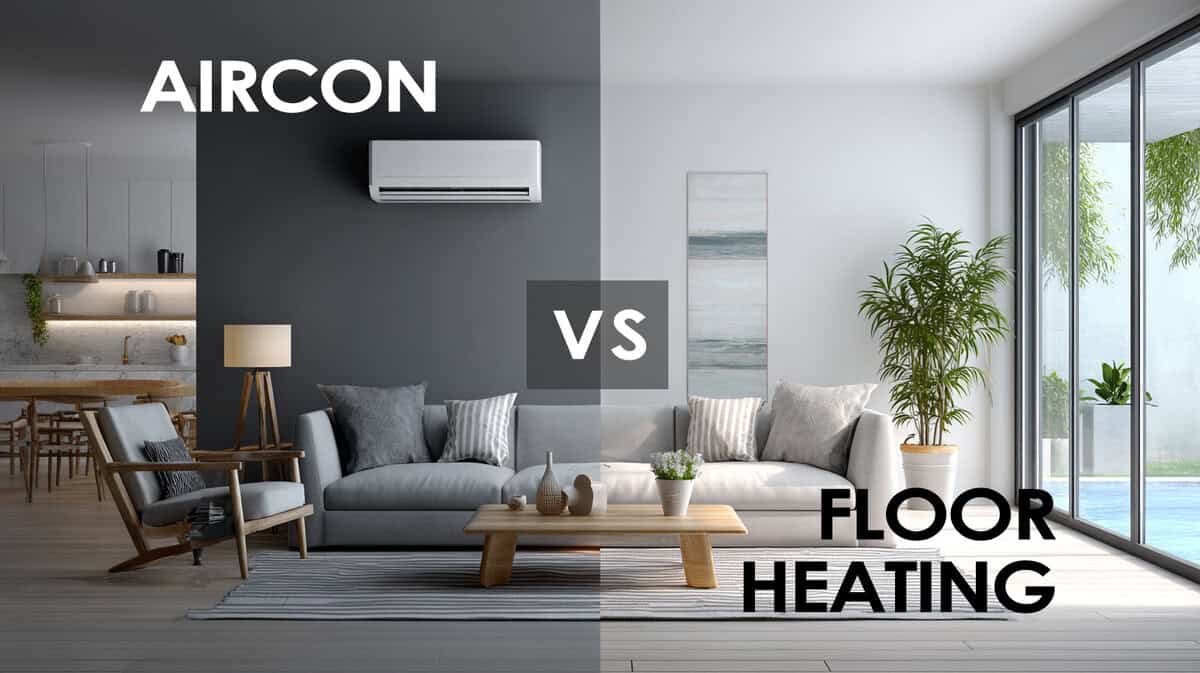
Ducted reverse-cycle air conditioning is the most common whole-home comfort system installed in Australian new builds today. Underfloor heating is the fastest-growing alternative.
If you are building, renovating, or replacing an ageing system, this guide gives you the honest comparison you need, covering comfort, running costs, air quality, installation, and long-term value so you can make the right decision for your home.
Table of Contents
- How Each System Works
- Comfort and Heat Quality Compared
- Air Quality and Health
- Running Costs: Ducted Air Conditioning vs Underfloor Heating
- Installation Costs and Disruption
- Cooling: What Underfloor Heating Cannot Do (and What To Do About It)
- Maintenance Requirements
- Long-Term Value & Resell Appeal
- Decision Matrix: Ducted vs Underfloor Heating
- Which System Is Right for Your Australian Home?
- Frequently Asked Questions
How Each System Works
Understanding how each system delivers warmth is the starting point for any meaningful comparison.
Ducted reverse-cycle air conditioning uses a central outdoor compressor unit connected to an air handling unit inside the roof space or under the floor. The system conditions air — heating it in winter, cooling it in summer — and distributes it through a network of ducts and ceiling or floor vents throughout the home. A single system handles both heating and cooling, which is its primary appeal. Ducted systems run on electricity and use a refrigerant cycle, similar to a split system air conditioner, but at whole-home scale.
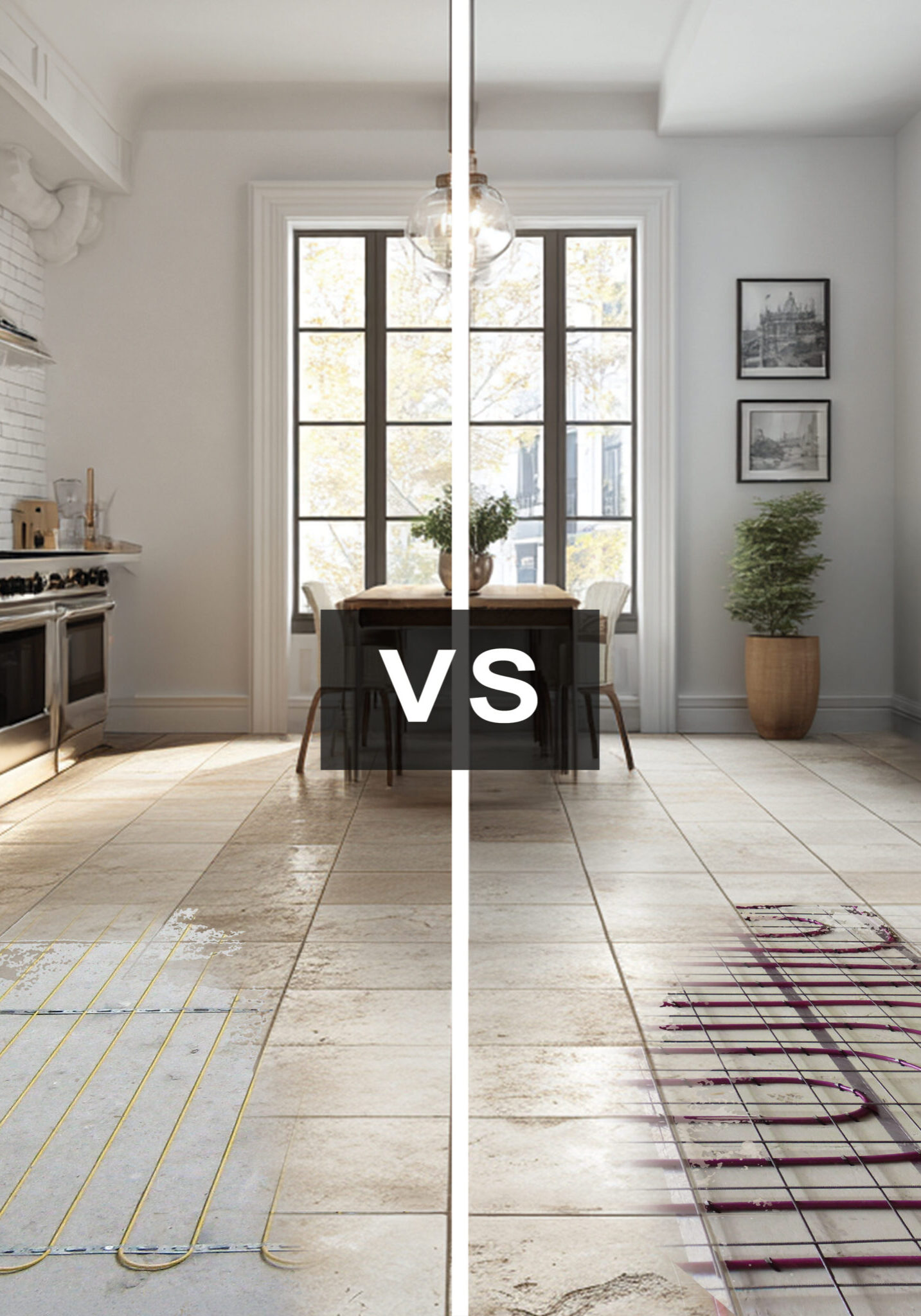
Underfloor heating works in a fundamentally different way. Instead of heating the air and pushing it around the home, it heats the floor surface itself. Warmth radiates upward from the floor and rises evenly through the room. There are no ducts, no forced air, no noise, and no visible hardware. Comfort Heat offers two types of underfloor heating for Australian homes:
- Electric underfloor heating — heating cables or mats installed beneath the floor surface. Best for individual rooms, renovations, and apartments.
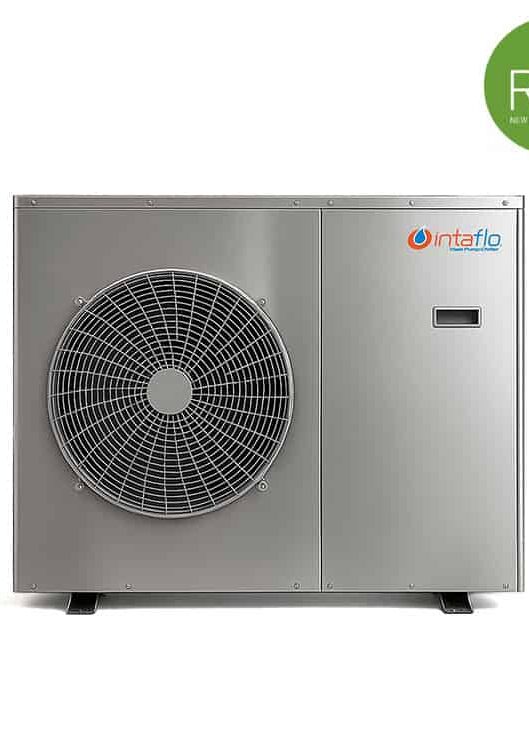
- Hydronic underfloor heating — warm water circulated through pipes beneath the floor, powered by the Intaflo air-to-water heat pump. Designed for whole-home heating in new builds and larger renovations.
The result of both underfloor systems is a room that is warm from the ground up. No cold zones near windows, no hot air pooling at the ceiling, no draughts from vents. The warmth is even, quiet, and completely invisible.
Comfort and Heat-Quality Compared
This is where the two systems diverge most sharply, and it comes down to physics.
Ducted air conditioning heats by pushing warm air into a room, typically from ceiling vents. Hot air rises, which means the warmest air collects near the ceiling — where nobody lives. At floor level, the air is noticeably cooler. The system cycles on and off to maintain the target air temperature, creating noticeable swings in comfort. Large open-plan spaces are particularly prone to uneven distribution, with some areas of the home heating far better than others depending on duct layout and distance from the air handling unit.
Underfloor heating works with physics rather than against it. The floor surface warms up and that heat rises gently and evenly through the entire room. From floor to ceiling, the temperature is consistent. There are no draughts, no cycling noise, and no cold spots. You feel warm because the surfaces around you are warm — not just the air briefly passing through above you.
Think about the difference between standing on warm beach sand versus standing in a room where the ceiling is warm but the floor is cold tile. Underfloor heating creates full-body warmth from below. Ducted air conditioning heats the air above where you are sitting.
For families with young children, underfloor heating is also the safest heating option. There are no hot vents, no exposed elements, and no contact risk. Children play on warm floors rather than avoiding cold ones.
| Comfort Factor | Ducted Air Conditioning | Underfloor Heating |
| Heat distribution | Uneven — warm air rises to ceiling | Even — radiant warmth from floor to ceiling |
| Floor temperature | Cold — unheated surface | Warm — the primary heat source |
| Temperature consistency | Cycles on/off, creates fluctuations | Steady, constant warmth |
| Draught / air movement | Yes — continuous forced air from vents | None |
| Noise | Fan and duct noise during operation | Completely silent |
| Cold spots | Common in large or poorly ducted rooms | Eliminated by full-floor coverage |
Air Quality and Health
The air quality difference between these two systems is significant and often underestimated by homeowners at the specification stage.
Ducted air conditioning moves air continuously. Every heating or cooling cycle draws air through a return grille, passes it through the air handling unit, and pushes it back through the duct network and vents. Any dust, pollen, mould spores, or pet dander in the system travels with it. Filters catch some of this material, but filters require regular cleaning and replacement to remain effective. A poorly maintained ducted system actively distributes allergens through every room it serves, every time it runs.
Ducted systems also introduce a humidity management challenge. When heating, they dry the air. When cooling, they dehumidify. Constant cycling between these states affects respiratory comfort, skin hydration, and the health of timber floors and furniture throughout the home.
Underfloor heating produces none of these issues. There is no air movement, no duct network, and no filter to maintain. The air in the room stays still, retains its natural humidity, and remains free of circulated allergens. This makes underfloor heating the healthiest heating choice for households with allergy sufferers, asthma patients, or young children. Read the full evidence in our guide to whether underfloor heating is good for your health.
Comfort Heat tip: If anyone in your household suffers from asthma, allergies, or dust sensitivity, underfloor heating eliminates all heating-related allergen triggers. No ducts means no dust circulation, no filter maintenance, and no compromised air quality.
Running Costs: Ducted Heating vs Underfloor Heating
Running costs depend on system size, home insulation, climate zone, usage habits, and electricity tariff. Here is an honest breakdown for a typical Australian home.
Ducted Reverse-Cycle Air Conditioning Running Costs
A ducted reverse-cycle system in a medium-sized Australian home (around 160 square metres) costs roughly $1,400 to $1,600 per year to run for heating across a typical winter, based on estimates from Sustainability Victoria and CHOICE's 2025 home heating analysis. These figures assume a well-programmed thermostat, a modern inverter-driven system, and standard insulation. Older or less efficient systems cost significantly more to run.
Electric Underfloor Heating Running Costs
Electric underfloor heating costs around 2 to 5 cents per square metre per hour to run. For individual rooms — bathrooms, kitchens, bedrooms — electric systems are extremely affordable to operate. A typical 5 square metre bathroom heated for 4 hours a day costs less than $65 for an entire Australian winter. For whole-home electric coverage, running costs are higher, which is why Comfort Heat recommends electric systems for targeted room heating and hydronic for whole-home applications. Full cost details are available in our underfloor heating cost guide.
Hydronic Underfloor Heating Running Costs
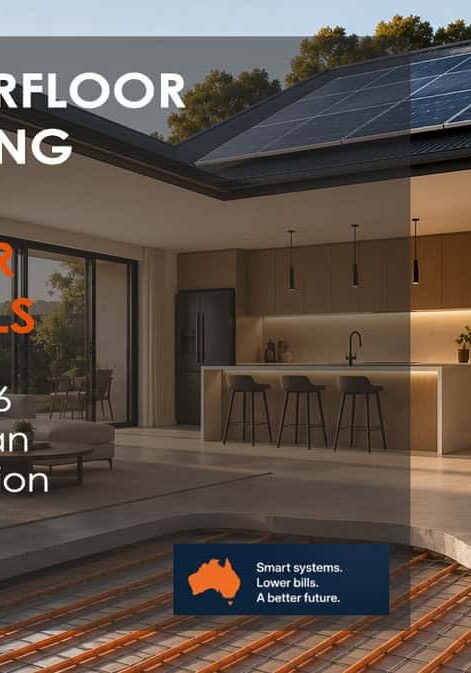
Hydronic underfloor heating paired with the Intaflo Series 3 heat pump is the most cost-effective whole-home heating option for larger Australian homes. The Intaflo achieves a COP (coefficient of performance) of around 3.45, meaning it delivers 3.45 units of heat for every 1 unit of electricity consumed. Annual running costs for a medium-sized home typically sit between $1,200 and $1,500 — comparable with or lower than ducted reverse-cycle — with a major long-term advantage: it is fully compatible with rooftop solar. Pre-heating the slab during peak solar generation hours (typically 10am to 3pm) means the floor holds warmth into the evening at minimal electricity cost.
| System | Approx. Annual Running Cost (Heating) | Fuel | Solar Compatible | Cooling Included |
| Ducted reverse-cycle AC | $1,400–$1,600 | Electricity | Partially | Yes |
| Electric underfloor (whole home) | Higher for large areas | Electricity | Yes, with smart scheduling | No |
| Hydronic underfloor + Intaflo heat pump | $1,200–$1,500 | Electricity (heat pump) | Excellent with PV solar | No |
Figures are approximate for a medium-sized Australian home of around 160 square metres. Actual costs vary with tariff, insulation, climate zone, and usage patterns.
Installation Costs & Requirements
Ducted Air Conditioning Installation
A ducted reverse-cycle system requires an outdoor compressor, an indoor air handling unit, a duct network throughout the ceiling or sub-floor cavity, and grilles in each room. In new builds this is built in from the start and costs between $8,000 and $16,000 depending on home size, number of zones, duct length, and brand. Retrofitting into an existing home is significantly more expensive and disruptive — ceiling cavities must be accessed, ducts run throughout the home, and significant construction work carried out. The system also requires ongoing refrigerant servicing and filter maintenance.
Electric Underfloor Heating Installation
Electric underfloor heating is the most straightforward system to install. Thin Heating Mats sit within the tile adhesive layer and add minimal floor height — ideal for bathrooms and kitchens. Screed Cable systems are embedded in a sand-and-cement screed and work under any floor covering. Both are best installed during a renovation when the floor is being opened up anyway. For confident owner-builders, DIY Electric Kits are available with a custom design layout and full technical support. Installation costs typically range from $100 to $200 per square metre, including thermostat and electrical connection.
Hydronic Underfloor Heating Installation
Hydronic installation involves laying pipe loops across the floor before the screed or slab is poured, connecting all loops to a central manifold, and connecting a heat source — the Intaflo Series 3 heat pump — to the circuit. Best specified at the design stage of a new build or major renovation. Hydronic is recommended for areas of 80 square metres and above, with a minimum of 40 square metres. DIY Hydronic Kits are available for licensed tradespeople and experienced owner-builders. Installation typically costs $150 to $300 per square metre, plus the heat source.
Not sure which system suits your project? Use the Comfort Heat Product Finder for a personalised recommendation in minutes.
Cooling: What Underfloor Heating Cannot Do (and What To Do About It)
This is the honest answer to the most common objection to underfloor heating: ducted reverse-cycle air conditioning provides both heating and cooling from a single system. Underfloor heating provides heating only.
In Australia's warmer states — Queensland, coastal New South Wales, Western Australia, the Northern Territory — cooling is as important as heating. A heating-only system requires a separate cooling solution, which means additional upfront cost.
However, the tradeoff is worth understanding clearly. A ducted reverse-cycle system that does everything moderately well costs $8,000 to $16,000 installed. A hydronic underfloor heating system paired with a high-efficiency multi-head split system or a separate small ducted system for cooling gives you a significantly better heating outcome and equally effective cooling — often at a comparable or lower total cost over 10 years when running cost savings are factored in.
For cooler-climate states — Victoria, Tasmania, the ACT, alpine regions of New South Wales — where heating is the dominant need for 6 or more months of the year, and where summers rarely exceed levels requiring aggressive air conditioning, underfloor heating as the primary system with a supplementary cooling solution is a well-established and cost-effective approach.
Comfort Heat's recommendation: in Victoria, Tasmania, and highland regions of New South Wales and the ACT, underfloor heating as primary heating paired with a split system for summer cooling is our most commonly specified whole-home solution for new builds. It delivers better heating comfort, lower running costs, and a healthier indoor environment than ducted reverse-cycle alone.
Maintenance Requirements
| System | Ongoing Maintenance Required |
| Ducted reverse-cycle AC | Filter cleaning every 1–3 months; annual outdoor unit refrigerant service; duct inspection every few years; coil cleaning recommended periodically |
| Electric underfloor heating | Zero. No moving parts, no filters, no fluids, no refrigerant. Nothing to service for the life of the system. |
| Hydronic underfloor heating | Annual Intaflo heat pump service; periodic water quality and pressure checks for the closed pipe circuit |
Electric underfloor heating has the lowest maintenance requirement of any heating system available in Australia. Once installed, it runs quietly under the floor for 25 to 35 years with nothing to clean, service, or replace. Hydronic systems require an annual heat pump service — similar to a ducted AC service — but the pipe circuit itself is sealed, uses no refrigerant, and requires no access to ceiling cavities or duct networks.
Long-Term Value and Resale Appeal
Both systems add value to an Australian home, but in different ways and to different buyer audiences.
Ducted reverse-cycle air conditioning is a known quantity. Most Australian buyers expect it in a new home and many see it as a baseline rather than a premium. Its value contribution is real but increasingly commoditised — particularly as the market matures and virtually every new build includes a ducted system.
Underfloor heating is still a differentiator. In the premium and upper-mid market, particularly for bathrooms, master bedrooms, and high-specification new builds, underfloor heating is increasingly expected by buyers and design professionals. Architects and interior designers specify it routinely for both aesthetic and performance reasons — no visible vents, no radiators, and no hardware interrupting the design of the space.
A well-designed underfloor heating system can be up to 40% more energy-efficient than ducted air systems, which is a compelling proposition for buyers evaluating long-term ownership costs. Read our guide to installing energy-efficient underfloor heating in a new home for how to specify this correctly from the design stage.
Decision Matrix: Ducted Heating vs Underfloor Heating Australia
Use this table to match the right system to your situation.
| Factor | Ducted Reverse-Cycle AC | Electric Underfloor Heating | Hydronic Underfloor Heating |
| Heat quality | Warm air, uneven distribution | Even radiant warmth from the floor | Even radiant warmth from the floor |
| Cooling included | Yes — heating and cooling combined | No | No |
| Air quality | Circulates dust and allergens; dries air | No air movement; humidity preserved | No air movement; humidity preserved |
| Annual running cost (heating) | ~$1,400–$1,600 | Low for rooms; higher whole-home | ~$1,200–$1,500 with heat pump |
| Installation cost | $8,000–$16,000 | $100–$200/m² | $150–$300/m² + heat source |
| Best project type | New build or major renovation | Single rooms, renovations, apartments | New build or whole-home renovation |
| Minimum area | Whole home | No minimum | 40m² min; 80m²+ recommended |
| Maintenance | Frequent — filters, refrigerant, ducts | Zero | Annual heat pump service |
| Solar compatible | Partially | Yes, with smart thermostat scheduling | Excellent — pre-heat slab from solar |
| Allergen and health risk | Moderate — ducts circulate dust | Excellent — no air movement | Excellent — no air movement |
| Noise | Fan and duct noise throughout operation | Silent | Silent |
| Design impact | Ceiling vents and return air grilles visible | Fully invisible | Fully invisible |
| DIY option | No | Yes — DIY Electric Kit | Yes — DIY Hydronic Kit (licensed trades) |
| Zone control | Yes — with zone dampers | Yes — independent thermostats per room | Yes — manifold zones, individual rooms |
For more on zone control options for underfloor heating, read our guide to zone-controlled underfloor heating in Australia.
Which System Is Right for Your Australian Home?
The right answer depends on your climate zone, project type, budget, and what matters most to you about your home environment.
Choose ducted reverse-cycle AC if:
- You are in a warm-climate state (Queensland, coastal NSW, WA, NT) where cooling is as important as heating
- You want a single system for both heating and cooling and do not want to manage separate solutions
- You are retrofitting into an existing home that already has duct infrastructure in place
Choose electric underfloor heating if:
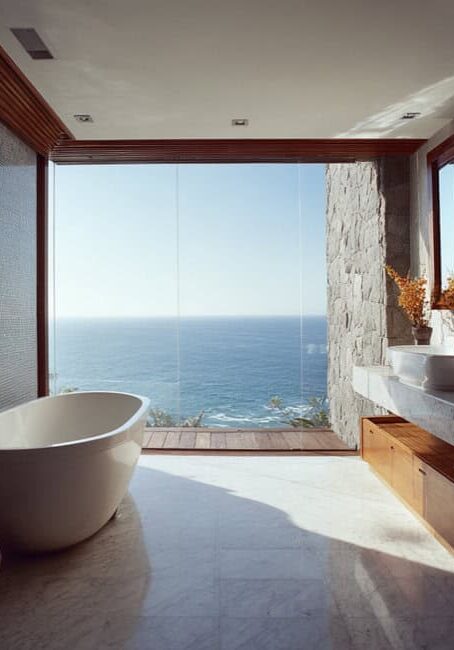
- You are renovating individual rooms — particularly bathrooms, kitchens, or bedrooms. Our bathroom underfloor heating guidecovers the full process for the most common Australian renovation.
- You want targeted room heating that is affordable to install and costs almost nothing to maintain
- You live in an apartment or townhouse where a whole-home system is not feasible
- You want to choose the best floor covering to maximise performance — read our guide to the best flooring for underfloor heating.
Choose hydronic underfloor heating if:
- You are building a new home or undertaking a major whole-home renovation
- You are in Victoria, Tasmania, the ACT, or any alpine or cool-climate region where heating is the primary year-round concern
- You want whole-home warmth, solar compatibility, and long-term running cost efficiency. See our full comparison of electric vs hydronic underfloor heating for a detailed breakdown of both options.
- You want a system with no visible hardware, no duct network, and no refrigerant in the roof space
Whatever your situation, Comfort Heat will give you honest advice. If underfloor heating is not the right fit for your project, we will tell you. That honesty is the foundation our business has been built on for over 25 years.
Use the Comfort Heat Product Finder to get a personalised system recommendation based on your home, floor covering, and project type.
Want to talk through your options with a specialist? Contact the Comfort Heat team today for a free consultation. Every quote includes a custom design layout at no extra charge — the only heating company in Australia to offer this as standard.
Ready to explore your options? Use the Comfort Heat Product Finder to find the right system for your renovation.
Or contact us to speak to one of our heating specialists or get a free quote today.
Frequently Asked Questions
Is underfloor heating better than ducted air conditioning in Australia?
For heating comfort and air quality, underfloor heating is the superior option. It delivers even radiant warmth from the floor up, produces no dust or allergens, is completely silent, and costs less to maintain. Ducted reverse-cycle air conditioning has the advantage of providing both heating and cooling from a single system. The right choice depends on your climate zone and priorities.
Can underfloor heating replace ducted air conditioning?
Yes, for heating. Underfloor heating provides heating only and cannot cool a home. In cooler-climate states like Victoria, Tasmania, and the ACT, underfloor heating as primary heating paired with a split system for summer cooling is a very effective and commonly used combination. In warm-climate states, ducted reverse-cycle may be the better whole-home solution.
Is ducted reverse-cycle air conditioning cheaper to run than underfloor heating?
Running costs are comparable. A ducted reverse-cycle system in a medium-sized home costs around $1,400 to $1,600 per year to run for heating. Hydronic underfloor heating with the Intaflo heat pump costs around $1,200 to $1,500 per year for the same home. Electric underfloor heating for individual rooms is very affordable — a bathroom costs less than $65 for a full winter.
Does underfloor heating work with solar panels?
Yes. Hydronic underfloor heating with the Intaflo heat pump is highly compatible with rooftop solar. Pre-heating the slab during peak solar generation hours means the floor holds warmth into the evening at near-zero electricity cost. Electric underfloor heating can also be scheduled to run during solar generation hours using a smart thermostat.
How long does underfloor heating last compared to ducted air conditioning?
Electric underfloor heating systems have a service life of 25 to 35 years with zero maintenance. The REHAU PEX pipe used in Comfort Heat hydronic systems is certified to 50 years. Ducted air conditioning compressors typically require replacement or major service every 10 to 15 years and ongoing annual maintenance throughout.
Is underfloor heating healthier than ducted air conditioning?
Yes. Underfloor heating produces no air movement and no allergen circulation. Ducted air conditioning pushes air — and everything in it — through the home with every cycle. For allergy and asthma sufferers, the difference is significant. Read the full evidence in our guide to whether underfloor heating is good for your health.
Ready to find out more?
Every great project starts with a conversation. Talk to the team here at Comfort Heat today for honest, expert advice on heating your bathroom.